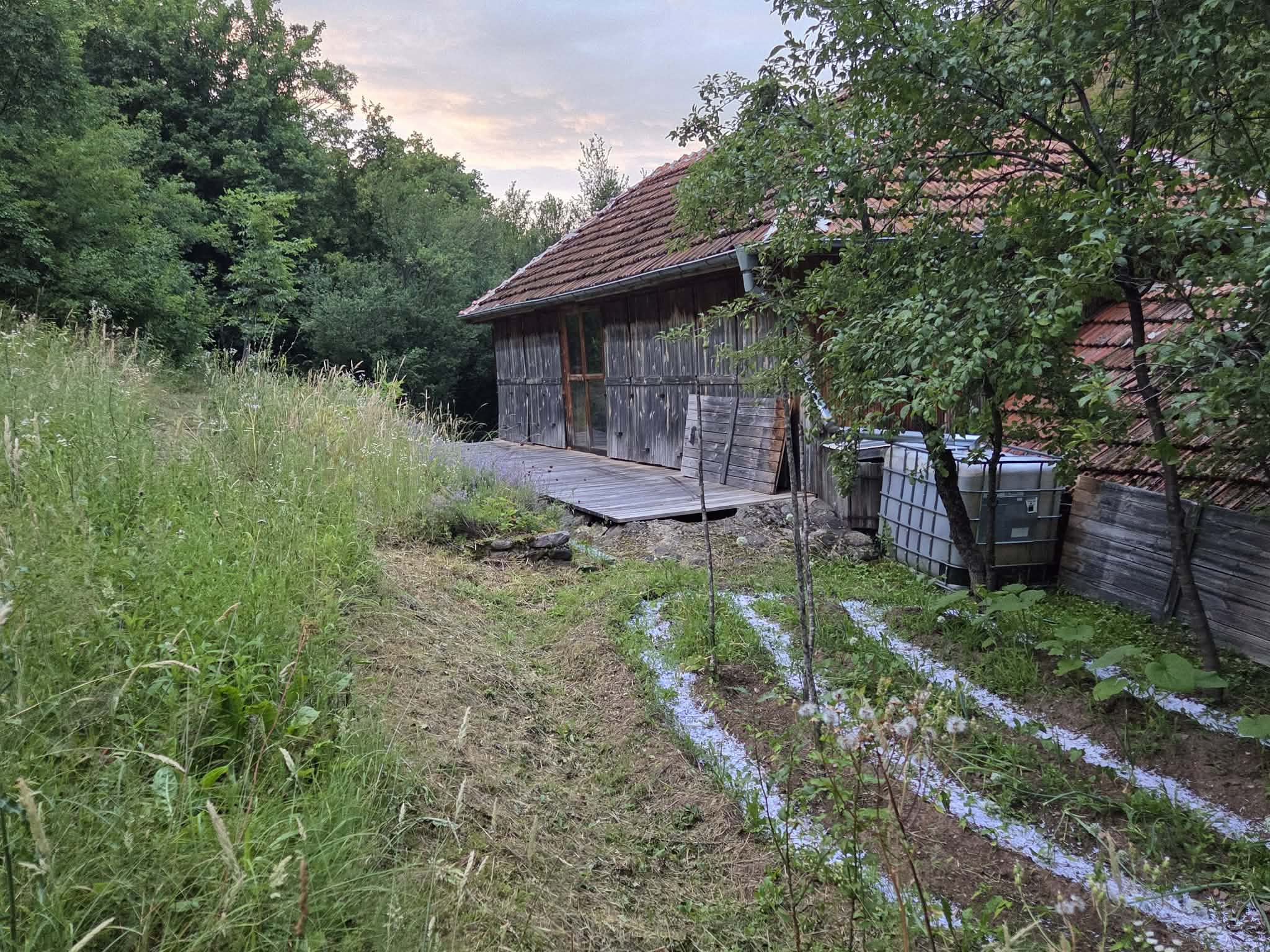
Over the years, the garden at Villa Verka has had different caretakers. Today, Galya is the person who cares for it most closely. These are a few of her thoughts.
I try to care for the garden at Villa Verka as a living organism—a place with its own voice, its own needs, and its own way of expressing itself. To me, it is part of a larger living world in which plants, soil, and people are constantly in conversation.
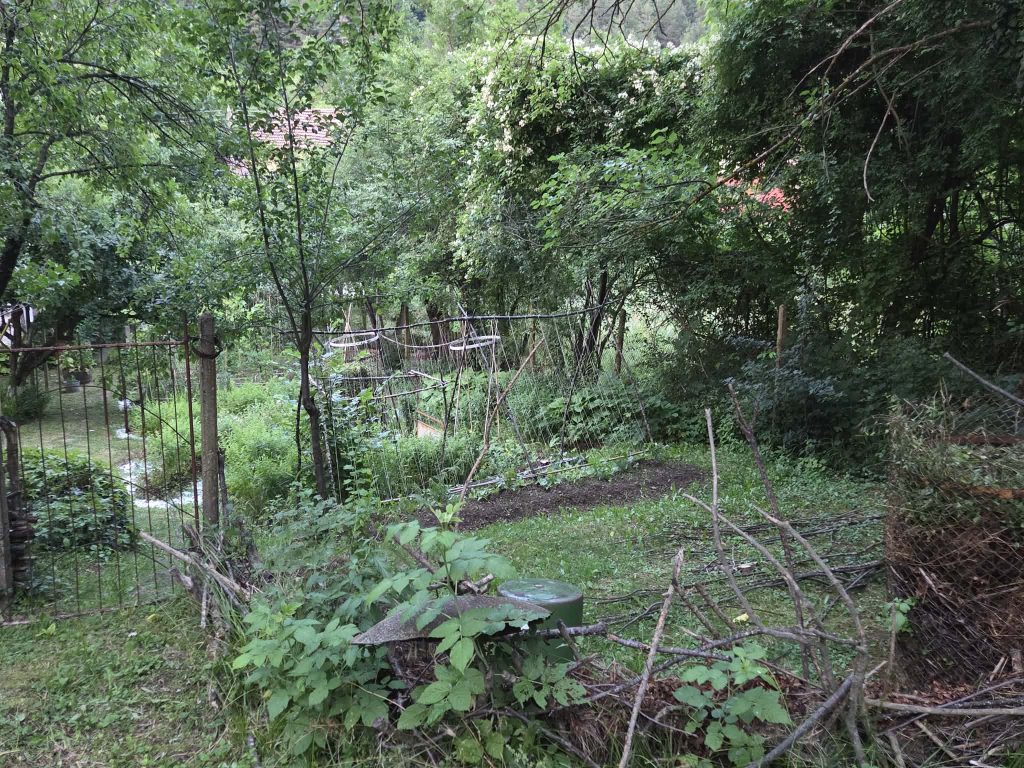
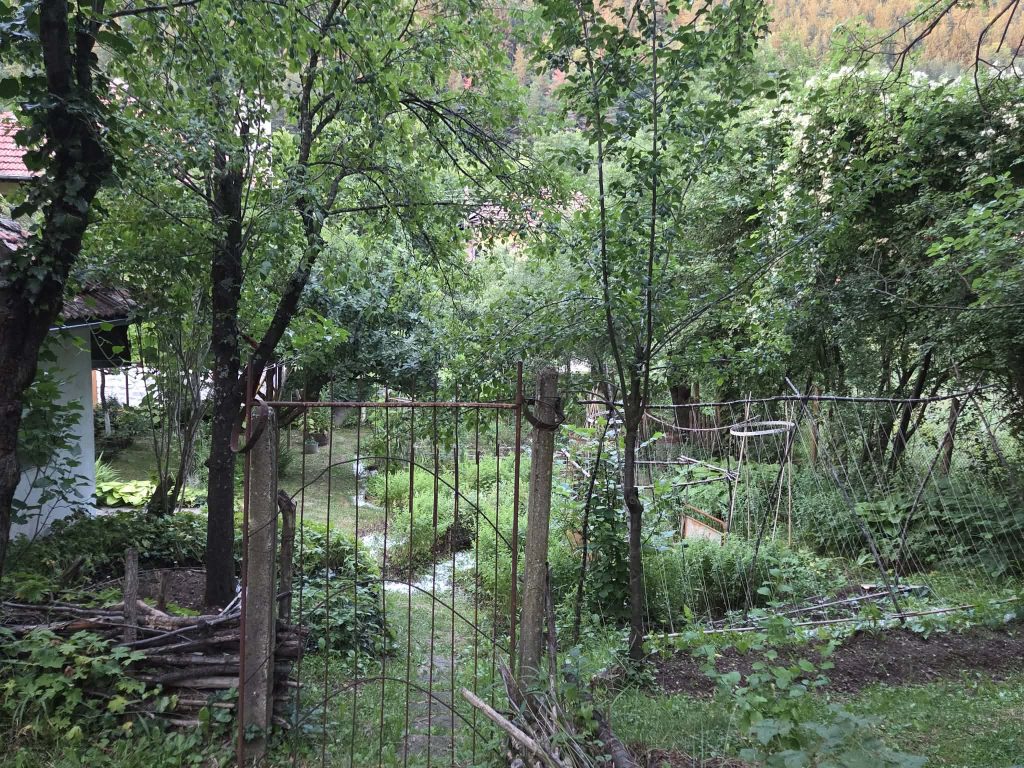
I treasure everything that has been passed on by those who cared for the garden before me. I see it as part of the language of this place: the white climbing rose and the peonies planted by my aunt and uncle; the hostas and the hedge; the pear trees, medlar, cherry plums, plum trees, grapevines, strawberries, and Jerusalem artichokes that my father and I planted together; as well as the salvias, lavender, and roses that Diana and I planted. Each of them carries memories and continues a conversation that began long before me.
The way I care for the garden follows natural principles. I do not leave the soil bare, nor do I plough or turn it deeply. Instead, I try to listen to it and work with it. I choose plants that support one another and create living relationships. I cover the soil with mulch made from what the garden itself provides: freshly cut grass, hay, straw, recycled cardboard, and even paper from the office, returned to the garden as part of its natural cycle.
Over time, I have noticed that the garden speaks differently every year. Wild plants and herbs find their own place here. Some sprout from the hay, others arrive with birds or the wind. I do not see them as accidents but as new words in the garden’s language. I allow many of them to stay and build my cultivated beds around them.
I do not think of myself as a traditional gardener. Rather, I see myself as taking part in the conversation the garden is constantly having. I nourish the plants with compost teas, walnut leaf infusions—following my father’s advice—and, when needed, with humus, rock dust, or neem oil. These are simply my ways of responding to what the garden is telling me.
Another passion of mine is recycling. Almost everything in the garden—raised beds, supports, and structures—has been created from reused materials: metal bed frames, bicycle wheels, wooden window crates, old roof tiles, glass bottles given to me by a neighbour, and wood from felled trees offered by a friend, which I turn into posts and borders for the beds. In this way, materials continue to “speak” instead of being thrown away.
The same is true for the plant containers. Old barrels, burnt cooking pots, cracked clay pots, and wooden boxes once used for animals have all found a new life in the garden. I even recycled an old wire fence into two additional compost bins, one of which also serves as a climbing structure for pumpkins and runner beans.
Working in the garden brings me genuine joy. Nature is my greatest teacher and an endless source of inspiration and creativity.